Conference
Preparation Process
The
preparation of the Conference 2025 was a comprehensive, participatory, and
well-coordinated process that involved multiple stakeholders and was guided by
RNMU’s mission to strengthen nursing and midwifery leadership, research, and professional
development in Rwanda and beyond.
The
process began with the establishment of a Conference Organizing Committee,
composed of RNMU leadership, technical experts, and volunteers assigned to
specific sub-committees, including scientific program, logistics and protocol,
communications, finance, partnerships, and monitoring and evaluation. Clear
roles and responsibilities were defined early to ensure accountability and
smooth coordination throughout the preparation period.
A
conference concept and theme were developed through consultative discussions,
aligning the conference with national health priorities, global nursing and
midwifery agendas, and the strategic objectives of RNMU. Based on this, a
detailed conference plan and timeline were developed, outlining key milestones including
call for abstracts, speaker invitations, sponsorship mobilization, logistics
arrangements, and communication activities.
The
scientific preparation involved developing and disseminating a call for
abstracts, identifying keynote speakers, panellists, and moderators from
national and international institutions, and coordinating the abstract review
process. Efforts were made to ensure diversity in topics, representation of
nurses and midwives from different sectors, and inclusion of early-career
professionals and researchers.
In
parallel, the logistics and protocol team worked on venue selection,
accommodation arrangements, participant registration systems, conference
materials, branding, and on-site coordination. Protocol volunteers were
recruited and trained to support guest reception, session management, and
overall participant experience. Attention was given to accessibility, time
management, and adherence to professional conference standards.
The
communications and mobilization strategy focused on promoting the conference
through emails, social media, official letters, and partner networks to ensure
wide participation. RNMU also engaged health science institutions, professional
bodies, and development partners to support attendance and visibility of the
conference.
Regular
planning meetings were held to review progress, address challenges, and adjust
strategies as needed. This collaborative and adaptive approach ensured that all
components of the conference were well aligned and ready ahead of the event.
Overall, the preparation process demonstrated RNMU’s strong organizational
capacity, teamwork, and commitment to delivering a high-quality scientific
conference for nurses and midwives.
Executive summary
Nurses and midwives are the backbone of healthcare
systems, playing a crucial role in advancing Universal Health Coverage (UHC).
Positioned at the front lines of care, they influence patient outcomes,
strengthen public health, and promote equity in access to services. Their
contribution is not only clinical but also strategic, shaping how health
systems respond to the needs of communities.
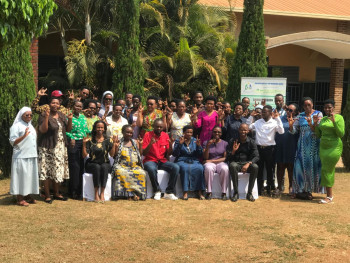
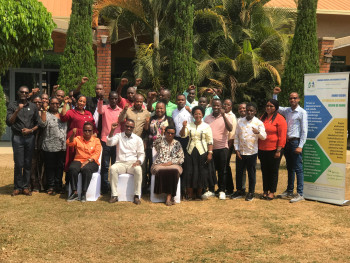
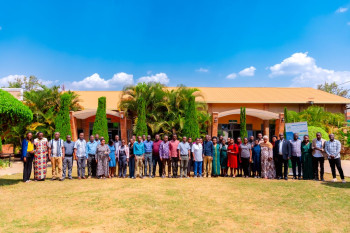
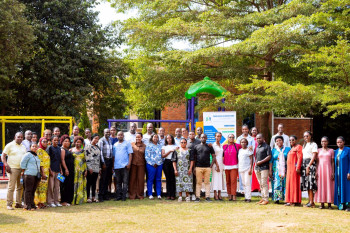
In recognition of this vital role, the Rwanda Nurses
and Midwives Union (RNMU), in collaboration with the Ministry of Health,
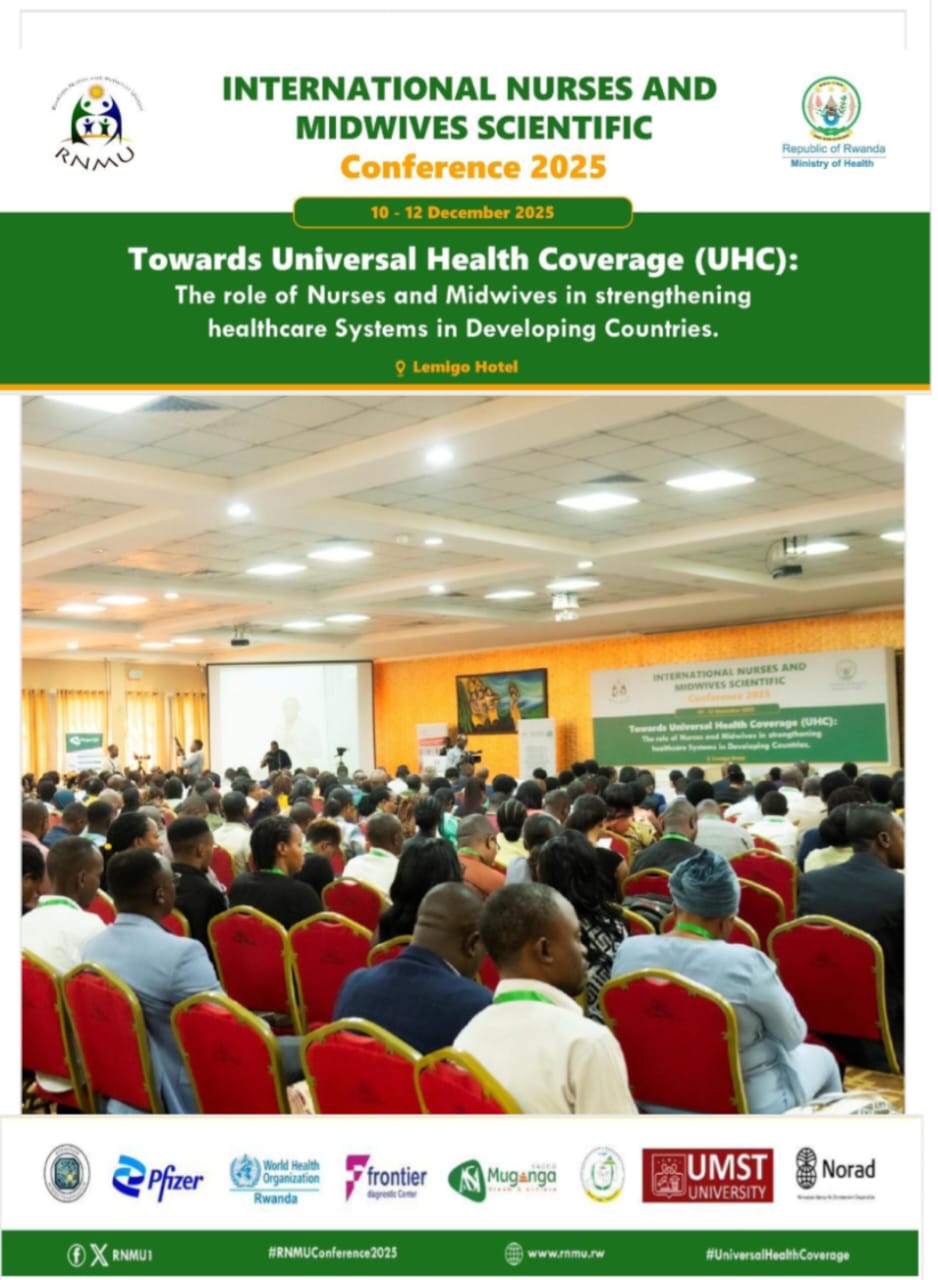
Rwanda, convened the International Nurses and Midwives Conference 2025 from
December 10 to 12, 2025, at the Lemigo Hotel, Kigali, Rwanda. This milestone
event was supported by strategic partners, including Norad, the Norwegian
Nurses Association, the World Health Organization, Pfizer, the Rwanda National
Council of Nurses and Midwives, Muganga SACCO, Frontier Diagnostic Center, and
UMST University.
The conference was the first of its kind in Rwanda,
creating a global platform for nurses, midwives, researchers, educators,
healthcare leaders, and policymakers. It provided space for scientific dialogues,
professional exchange, policy reflection, and collaborative learning, all aimed
at strengthening healthcare systems and accelerating progress toward UHC.
Guided by the theme “Towards Universal Health Coverage: The Role
of Nurses and Midwives in Strengthening Healthcare Systems in Developing
Countries”, the discussions focused on how nurses and midwives can be
better positioned, empowered, and supported to lead transformative change in
health service delivery. The
program was organized around five interconnected subthemes:
- Strengthening Primary
Healthcare (PHC) through nursing and midwifery services
- Integrating technology and
innovation into healthcare delivery
- Policy, leadership, and
management in nursing and midwifery
- Education and training
responsive to current health needs
- Addressing emerging global
challenges affecting health systems
Over the course of two days, the conference hosted 890
delegates representing 100 organizations from 15 countries. The agenda featured
four plenary sessions, five keynote speeches, twenty oral abstract presentations,
and four poster presentations, each offering fresh insights and practical
strategies. Panel discussions and plenaries encouraged participants to reflect
on bold actions needed to ensure equitable, high-quality care for all.
A recurring message echoed across sessions: the future of healthcare depends on uniting education, research, and policy to transform the nursing and midwifery professions. Delegates emphasized that by elevating the role of nurses and midwives, integrating innovation, and aligning policy with practice, these professionals can drive the systemic changes required to achieve UHC.
Ultimately, the conference underscored a collective commitment: to harness the leadership and expertise of nurses and midwives as catalysts for resilient, people-centered health systems. It marked a turning point in recognizing their indispensable role, not only in Rwanda but across the global health community.
1. OPENING CEREMONY AND PLENARY SESSION
1.1 Welcome Remarks and Official Opening
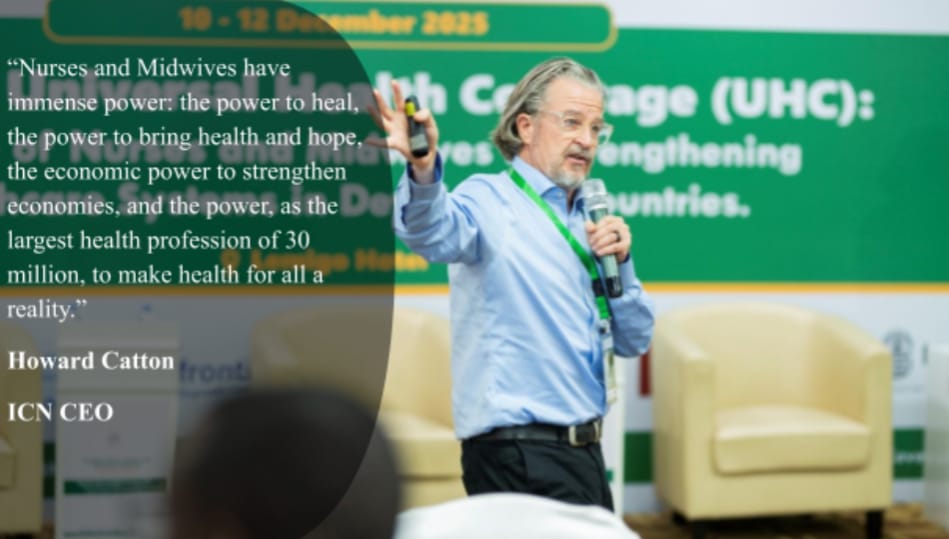
Mr. Andre GITEMBAGARA, RNMU President: Welcomed international and local delegates, highlighting Rwanda's significant progress toward Universal Health Coverage (UHC) and recognizing the tireless dedication of Rwanda’s nurses and midwives. He emphasized that motivated and well-trained health professionals are the cornerstone of the national health vision.
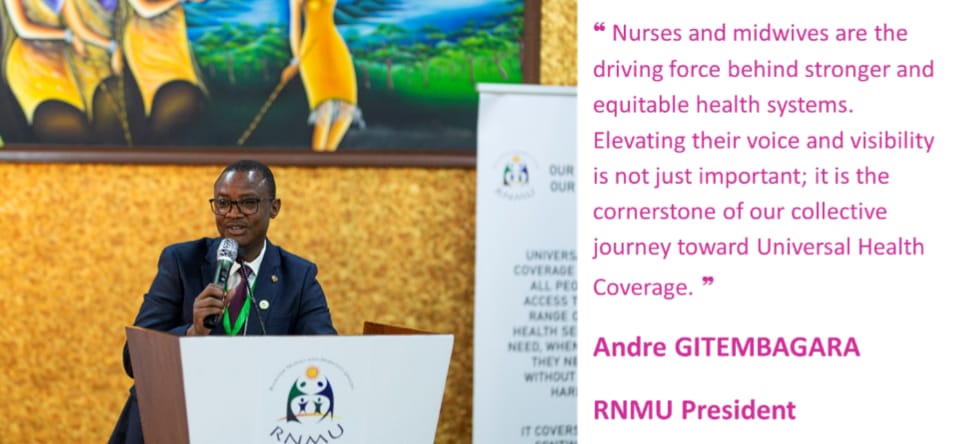
The Guest of Honour, representing the Ministry of Health, Dr. Rukundo Athanase, Head of the Clinical and Public Health Department, officially opened the conference on behalf of the Minister of Health. In his remarks, he emphasized that nurses and midwives are indispensable to building resilient health systems. He also reaffirmed the Ministry of Health’s continued commitment to supporting all initiatives that advance and strengthen these vital professions.
1.2 Keynote speeches
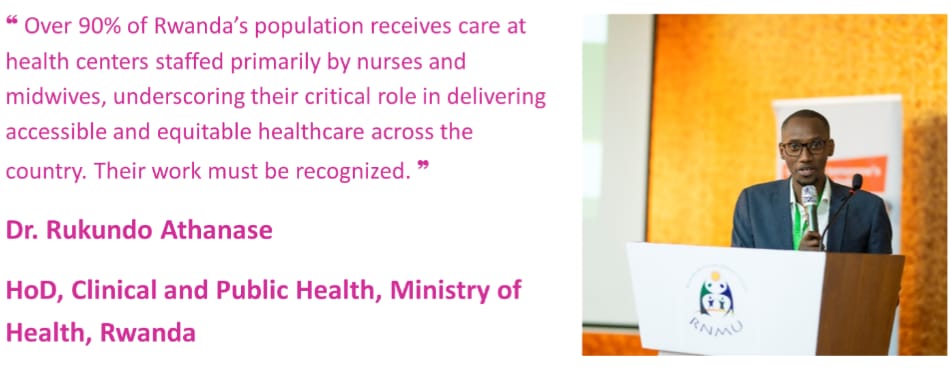
Dr. CHIROMBO Brian, WHO Rwanda Representative:
Emphasized that nurses are not merely assistants but true “clinical guides” and the backbone of Primary Health Care (PHC). To illustrate this, he shared a powerful clinical story from his time as a surgeon in Zimbabwe, where a nurse’s critical intervention prevented a surgical error—demonstrating the indispensable role nurses play in guiding safe and effective care. He reaffirmed WHO’s commitment to advancing evidence-based practice and strengthening midwifery education, recognizing these as essential tools for reducing maternal and newborn mortality. Key priorities identified included positioning PHC as a life-saving model, expanding midwifery education to address maternal and neonatal deaths, and embedding evidence-based practice across health systems. He further reiterated WHO’s support for Rwanda’s “4 by 4” PHC model, underscoring its potential to build resilient, accessible, and equitable healthcare for all.
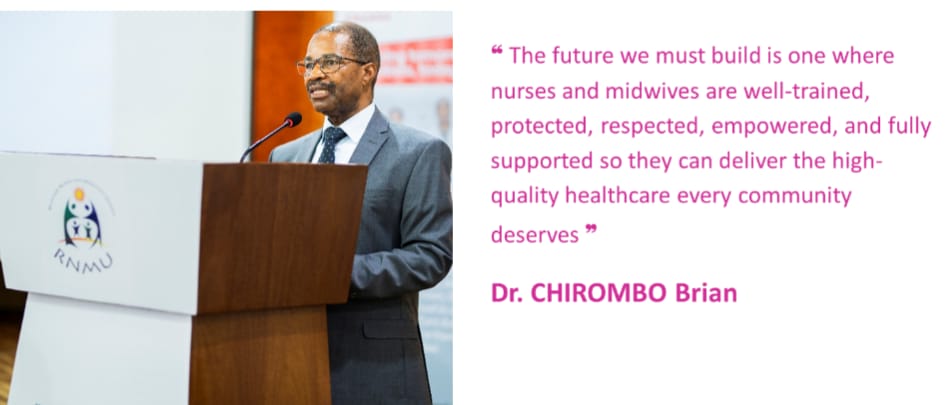
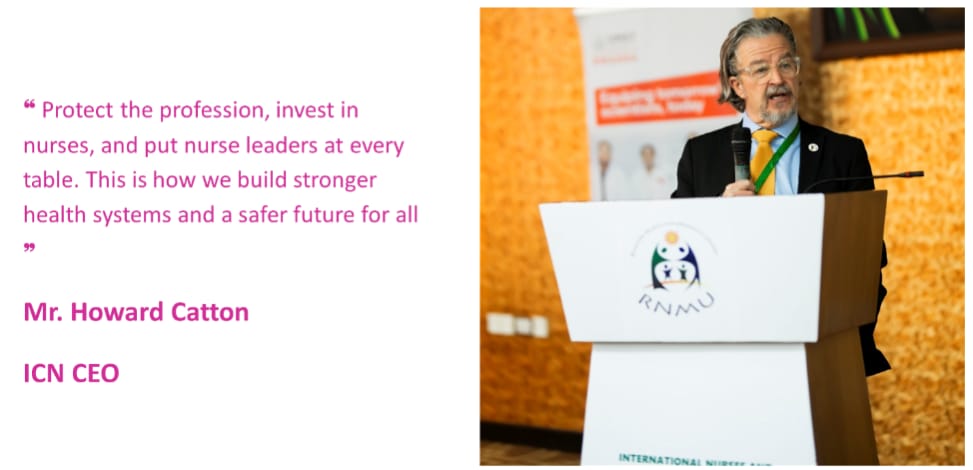
Mr. Howard Catton, CEO of the International Council of
Nurses (ICN)
Mr. Howard Catton, CEO of the International Council of
Nurses, expressed his deep honor at returning to Kigali, commending both the
city’s beauty and the powerful voices of African nurses represented at the
congress. He emphasized that investing in nurses and midwives is an investment
in stronger care, stronger advocacy, and stronger leadership, and reaffirmed
ICN’s commitment to ensuring these professions have the resources and support
they need to thrive.
Mr. Catton highlighted the critical frontline role of
nurses in addressing global challenges, including the climate crisis and
persistent inequities in workforce distribution, which are exacerbated by
aggressive recruitment from high-income countries. He emphasized that strong
nursing associations foster strong nurses and strong nurses, in turn, build
strong nations.
In closing, he pledged ICN’s unwavering support for nurses and midwives worldwide, including in contexts of disaster and conflict, reinforcing the profession’s indispensable role in advancing resilient and equitable health systems.
2.
PANEL DISCUSSIONS: STRATEGIC DIALOGUES
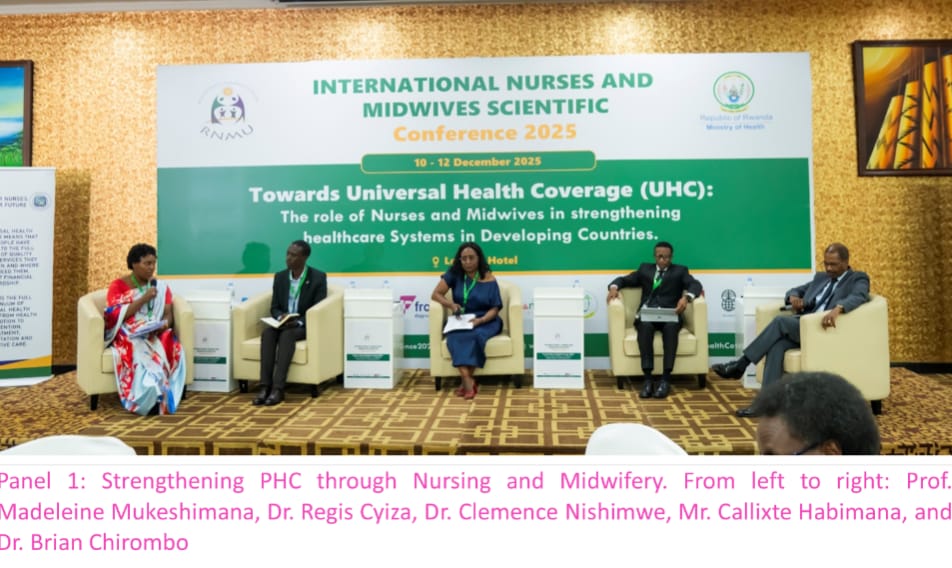
Panel
1: Strengthening PHC through Nursing and Midwifery
Panelists:
1.
Dr Brian
Chirombo, WHO Rwanda Representative
2.
Dr Regis Cyiza, Director of
Health Facilities Program, RBC
3.
Mr Callixte Habimana, Head of
Rugerero Health Center
4.
Dr Clemence Nishimwe, Dean, Mount
Kigali University
Discussant:
Professor
Madeleine Mukeshimana
Speaker Contributions
Dr. Clemence Nishimwe Advocated for
transforming nursing and midwifery education from a hospital-centered model to
a community-responsive approach. She stressed the urgency of reorienting
curricula toward community health, health promotion, and disease surveillance.
She also highlighted the potential of digital innovations such as telehealth
and mobile applications to extend PHC services to underserved populations.
Dr. Regis
Cyiza represented the Rwanda Biomedical Centre (RBC) and outlined how nursing
services are integrated within the structured health system. He emphasized the alignment
of nursing contributions with national health facility programs and strategic
goals, reinforcing their role in system resilience.
Mr. Callixte Habimana provided a frontline perspective from health center management. He focused on the practical realities of implementing PHC services at the community level, including challenges and opportunities for scaling, strengthening access, and equity.
Thematic
highlights
- Community
Empowerment: A strong PHC system depends on a workforce that
is responsive to community needs. Nurses and midwives must be trained and
supported to act as agents of empowerment, not just service providers.
- Strategic
Investment: Panelists agreed that investing in nurses and
midwives—through fair salaries, continuous professional development (CPD),
and supportive policies—should be viewed as a strategic investment in
national health security, rather than a financial burden.
- Decentralization: Rwanda’s
ongoing decentralization strategy, including the rollout of “second‑generation”
health posts, is bringing maternity, laboratory, and pharmacy services
closer to communities, strengthening access and equity.
Implications for Policy and Practice
- Curriculum
Reform: Nursing and midwifery education must evolve to
prioritize community health competencies, equipping graduates to address
prevention, surveillance, and health promotion at the grassroots level.
- Digital
Health Integration: Investment in telehealth platforms and mobile
applications can significantly expand PHC reach, particularly in rural and
underserved areas. Policymakers should prioritize digital literacy and
infrastructure for frontline workers.
- Workforce
Retention: Ensuring fair compensation, CPD opportunities,
and a supportive workplace environment is critical to retaining skilled
nurses and midwives. This requires sustained commitment from the
government, along with a corresponding budget allocation.
- Strengthening
Health Posts: The decentralization model demonstrates
Rwanda’s leadership in bringing services closer to communities. Scaling up
“second-generation” health posts can serve as a blueprint for other
countries seeking to expand PHC coverage.
- Community‑Responsive Leadership:
Empowering frontline managers, like health center heads, to adapt services
to local realities ensures that PHC remains responsive, resilient, and people
centered.
Panel
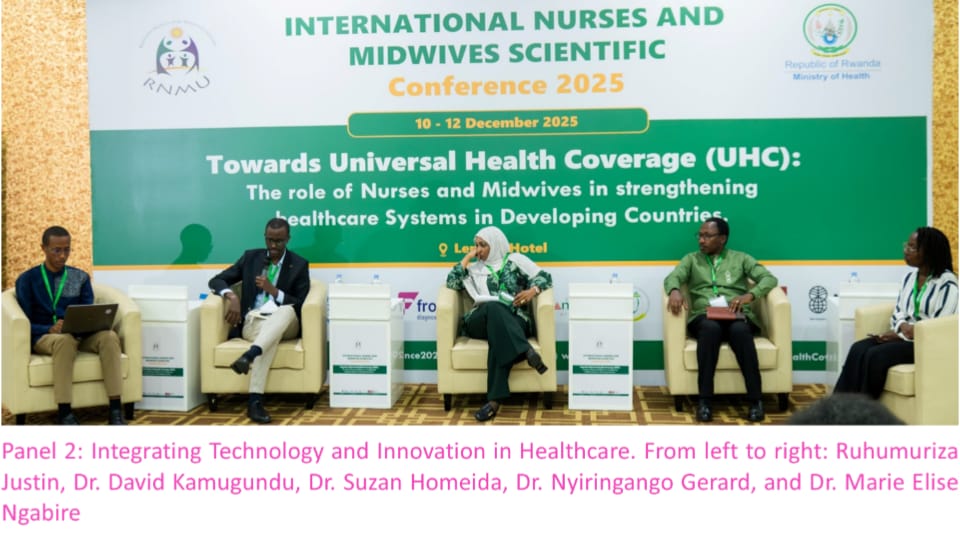
2: Integrating Technology and Innovation in Healthcare
Panelists:
- Dr. David Kamugundu – CEO,
eFiche
- Dr. Nyiringango Gerard –
Nursing Educator, University of Rwanda
- Dr. Marie Elise Ngabire –
Clinical Attachment Analyst, Ministry of Health
- Dr. Suzan Homeida –
Managing Director, Frontiers Diagnostic Center
Discussant:
Justin
Ruhumuriza
Speaker
Contributions
Dr. David
Kamugundu (CEO, eFiche)
- Demonstrated how the
eFiche platform is designed to revolutionize healthcare provision.
- Highlighted benefits such
as improved documentation, automation of processes, and streamlined workflows.
- Introduced an AI component
within eFiche to support healthcare providers in making more accurate and
timely clinical decisions.
Dr. Suzan
Homeida (Managing Director, Frontiers Diagnostic Center)
- Emphasized the importance
of creating a safe learning environment for students through technology.
- Discussed the use of AI in
education, tailored to specific training needs.
- Advocated for simulation-based
education and team-based assimilation to strengthen clinical competencies.
- Highlighted the role of innovation
at the point of care, particularly in medical imaging, for accurate and
timely diagnosis.
Dr.
Nyiringango Gerard (Nursing Educator, University of Rwanda)
- Shared insights on how
nursing and midwifery education must evolve to sustain the provision of
quality care.
- Stressed the need to
integrate technology and innovation into curricula to prepare graduates
for modern healthcare challenges.
Dr. Marie
Elise Ngabire (Clinical Attachment Analyst, Ministry of Health)
- Addressed current
challenges in clinical placements for health profession students,
including limited capacity and supervision.
- Explained how digital
networks and platforms can be leveraged to overcome these challenges,
improving the quality and accessibility of clinical attachment experiences.
Key Thematic
Highlights
- Digital Transformation:
Technology platforms such as eFiche demonstrate how digital innovation can
streamline processes, enhance documentation, and support clinical decision-making.
- Education Innovation: AI-driven
and simulation-based training models are reshaping how students learn,
ensuring safer environments and more tailored skill development.
- Curriculum Evolution: Nursing
and midwifery education must adapt to integrate digital tools, preparing
graduates to deliver high-quality, technology-enabled care.
- Clinical Placement Reform: Digital
networks can bridge gaps in clinical attachments, offering scalable
solutions to supervision and training challenges.
- Point‑of‑Care Innovation: Advances in medical imaging and diagnostics highlight the potential of technology to improve accuracy and patient outcomes.
Implications for Policy and Practice
- Scaling Digital Platforms:
Policymakers should prioritize investment in technology platforms like
eFiche to strengthen documentation, automate workflows, and enhance
clinical decision-making.
- Embedding Technology in
Education: Nursing and midwifery curricula must
integrate AI, simulation, and digital tools to prepare students for the
realities of modern healthcare.
- Strengthening Clinical
Attachments: Ministries of Health and universities
should collaborate to expand digital networks that support student
placements, ensuring equitable access to quality training.
- Innovation at the Point of
Care: Diagnostic centers and frontline facilities should adopt
innovative technologies to improve accuracy and reduce delays in care.
- Workforce Readiness:
Continuous professional development (CPD) programs must incorporate
digital literacy and innovation skills, ensuring nurses and midwives
remain at the forefront of healthcare transformation.
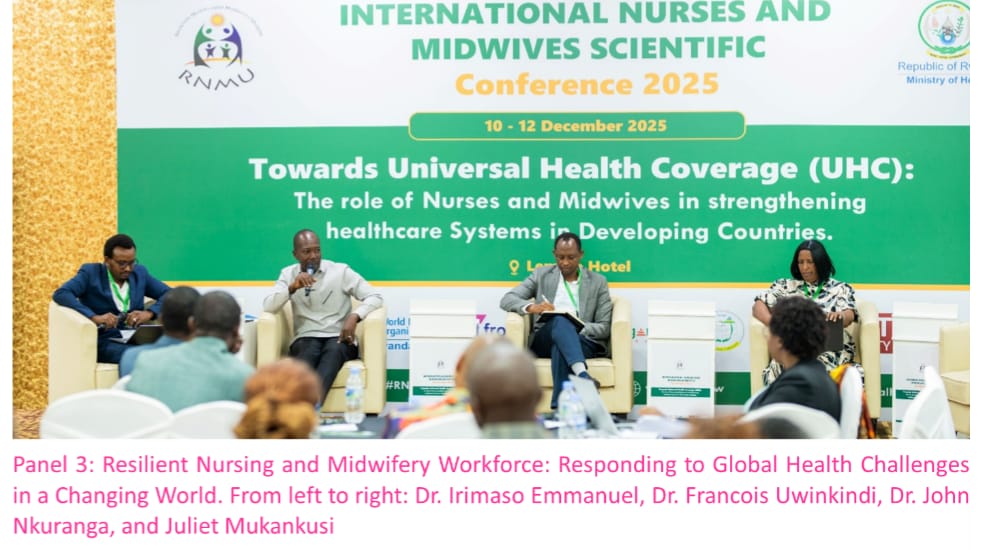
Panel 3: Resilient Nursing and Midwifery Workforce: Responding to Global Health Challenges in a Changing World
Panelists:
- Dr.
François Uwinkindi – NCDs Division Manager, Rwanda Biomedical Centre (RBC)
- Dr. John
Nkuranga – Referral Hospitals Representative
- Juliet,
Rwanda Association of Midwives (RAM) Representative
Discussant: Dr. Irimaso, University of Rwanda
Speaker Contributions
Dr. François Uwinkindi (RBC)
- Discussed
the integration of NCD management at decentralized levels, ensuring care
is closer to communities.
- Highlighted
the role of Registered Nurses in managing NCDs such as hypertension,
asthma, and type 2 diabetes at health centers.
Dr. John Nkuranga (Referral Hospitals Representative)
- Provided
insights into how referral hospitals are adapting to the epidemiological
shift toward NCDs, emphasizing the need for specialized workforce
training.
- Focused
on the policy frameworks required to support frontline workers in
specialized roles.
- Stressed
the importance of aligning workforce resilience strategies with national
health priorities.
Juliet Mukankusi (Representative, RAM)
- Emphasized
the central role of midwives in Rwanda’s “Mission 2027” strategy to
eliminate cervical cancer.
- Outlined targets: 90% HPV vaccination, 70% screening with high-performance tests, and 90% treatment coverage for identified cases
Key Thematic Highlights
- Epidemiological
Shift: NCDs now account for 46% of deaths in health facilities and 61% of
deaths in the community, with hypertension prevalence rising to 16.8% and
diabetes steady at 2.9%. Risk factors such as high salt consumption (8.8g
daily average) and alcohol use remain major concerns.
- Resilience
and Specialization: Continuous capacity building is needed to
strengthen community awareness and empower nurses and midwives to manage
NCDs. The PEN‑Plus model was highlighted as a framework for nurses and
midwives to manage complex conditions such as type 1 diabetes, rheumatic
heart disease, and heart failure.
- Cancer
Elimination: Midwives are positioned as frontline leaders in
Rwanda’s Mission 2027 cervical cancer strategy, driving vaccination,
screening, and treatment efforts.
- Expanded
Workforce Roles: Nurses and midwives must serve as frontline
agents for cancer screening and early detection, provide palliative care
services, and ensure adherence to treatment protocols while identifying
complications early.
Implications for Policy and Practice
- Decentralized
NCD Care: Strengthening the role of nurses at health
centers is critical to managing the rising burden of NCDs.
- Midwives
in Cancer Elimination: Midwives must be empowered and resourced to lead
cervical cancer elimination efforts, aligning with Rwanda’s Mission 2027
targets.
- Capacity
Building: Continuous training and specialization are
essential to equip nurses and midwives for emerging global health
challenges.
- PEN‑Plus
Expansion: Scaling the PEN‑Plus model can ensure equitable
access to care for severe NCDs, particularly in rural communities.
- Policy
Support: Strong representative frameworks and supportive
policies are needed to sustain workforce resilience and protect frontline
workers.
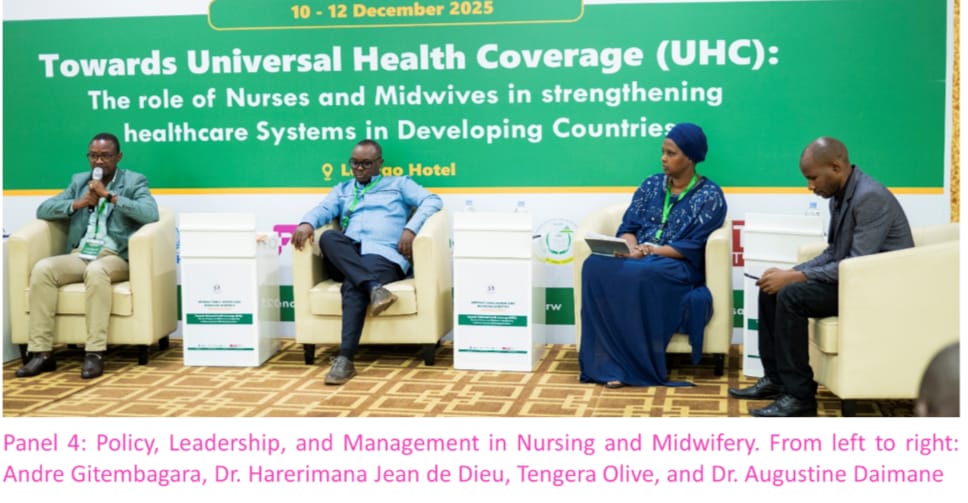
Panel 4: Policy, Leadership, and Management in Nursing and Midwifery
Panelists:
- Andre Gitembagara –
President, Rwanda Nurses and Midwives Union (RNMU)
- Dr. Augustine Ndaimane –
Acting Chair, Center for Nursing and Midwifery, University of Global
Health Equity (UGHE)
- Tengera Olive – Head of
Midwifery Department, University of Rwanda
- Dr. Harerimana Jean de Dieu
-- Technical Advisor (Health Financing), Clinton Health Access Initiative
(CHAI).
Discussant:
Dr. Muraraneza Claudine
Speaker Contributions
Andre Gitembagara (RNMU President)
- Focused on the role of
professional unions in advocacy and policy influence.
- Emphasized the need for
motivated nurses and midwives to achieve national health goals.
- Highlighted the importance
of leadership that protects and empowers the workforce, ensuring their
voices are heard in policy spaces.
Dr. Augustine Ndaimane (UGHE)
- Addressed the intersection
of global health leadership and equity.
- Discussed how nursing
management must evolve to lead multidisciplinary teams in complex
environments, drawing on experiences from UGHE.
- Stressed the importance of
equipping nurse leaders with skills to navigate global health challenges.
Tengera Olive (University of Rwanda)
- Represented the midwifery
perspective in policy development.
- Focused on the importance of
specialized leadership roles in maternal health, ensuring midwifery-led
care is integrated into national healthcare management strategies.
- Advocated for stronger
recognition of midwives as leaders in shaping maternal and newborn health
outcomes.
Dr. Harerimana Jean de Dieu (CHAI)
· Provided insights on the financial frameworks and resource allocation strategies required to sustain high-quality nursing and midwifery services in developing countries.
- Emphasized the importance of
health financing reforms that prioritize frontline workers, ensuring
nurses and midwives are adequately resourced to deliver equitable care.
- Stressed the need for innovative financing models that balance limited resources with the growing demand for specialized services, particularly in maternal and newborn health.
- Advocacy and Policy
Influence: Professional unions are pivotal in shaping
health policy, ensuring that nurses and midwives are empowered to actively
contribute to national health priorities and reforms.
- Leadership and Equity: Nursing
leadership must evolve to confront equity challenges, guiding diverse,
multidisciplinary teams in increasingly complex health environments.
- Midwifery Leadership:
Specialized leadership roles in maternal health are essential to embed midwifery-led
care into national strategies, thereby strengthening maternal and newborn
outcomes.
- Management Frameworks:
Sustainable and adaptable management structures are required to uphold high-quality
services in resource-limited settings, aligning with the broader goal of
Universal Health Coverage (UHC).
Implications for Policy and Practice
- Strengthening Professional Unions:
Continued support for unions such as RNMU is vital to amplify the
collective voice of nurses and midwives, ensuring their perspectives shape
health policy and workforce strategies.
- Leadership Development:
Investment in leadership training programs will equip nurses and midwives
to manage multidisciplinary teams effectively and champion equity in
healthcare delivery.
- Midwifery Integration: National
health strategies should explicitly recognize and integrate midwifery
leadership roles, positioning midwives as central actors in improving
maternal and newborn health outcomes.
- Resilient Management Models:
Developing flexible and context-responsive management frameworks is
essential to sustain service quality in resource-constrained environments
and advance progress toward UHC.
- Empowerment and Motivation: Policies
must prioritize the protection, motivation, and empowerment of the nursing
and midwifery workforce, recognizing these as foundational elements of
resilient and people-centered health systems.
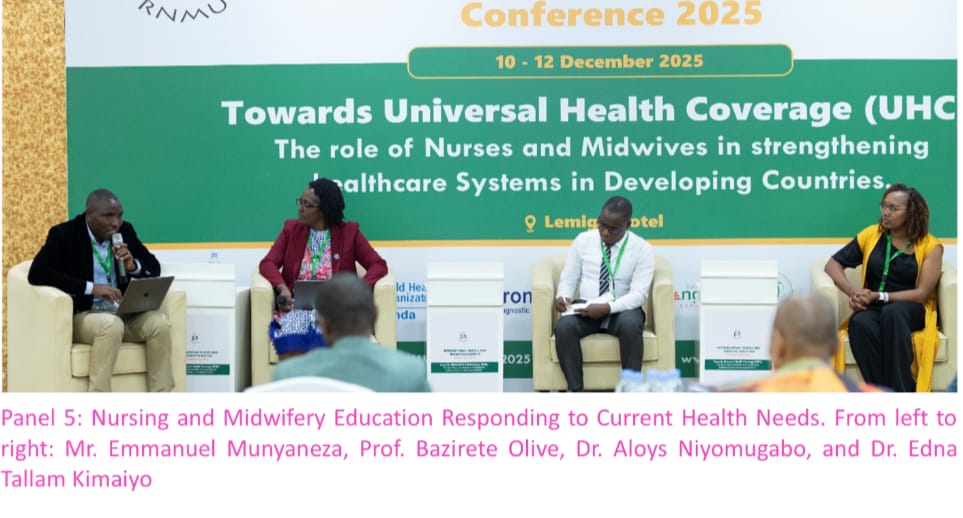
Panel 5: Nursing and Midwifery Education Responding to Current Health Needs
Panelists:
- Prof. Bazirete Olive –
Dean, School of Nursing and Midwifery (UR)
- Dr. Aloys Niyomugabo –
Recent PhD Graduate, UR/SoNM
- Dr. Edna Tallam‑Kimaiyo
– Head of Department, Amref International University
Discussant:
Mr. Emmanuel Munyaneza
Speaker Contributions
Dr. Edna Tallam‑Kimaiyo (Amref International University)
- Advocated for a
paradigm shift from a hospital-centered (reactive/curative) model to a
community-centered (preventive/promotive) approach.
- Identified critical
gaps in current education, including insufficient community practicum
time, limited digital skills for telehealth, and weak alignment with
emerging priorities such as One Health and NCD prevention.
- Proposed a strategic
vision that includes mandatory PHC and community rotations, competency-based
problem solving, and stronger collaboration between professional nurses
and Community Health Workers (CHWs).
Prof. Bazirete Olive (UR)
- Outlined Rwanda’s
national transformation in nursing and midwifery education, emphasizing competency-based
and community-oriented curriculum reform.
- Highlighted strategic
actions such as hybrid/digital learning, standardized skills labs for
clinical training, and specialty programs in critical care and oncology.
- Projected the impact of
these reforms as creating a “future-ready” workforce capable of improving
Maternal, Newborn, and Child Health (MNCH) outcomes and responding
effectively to public health threats and NCDs by 2030.
Dr. Aloys Niyomugabo (UR/SoNM)
- Represented the new
generation of nursing researchers, emphasizing the integration of advanced
evidence-based research into curricula.
- Highlighted how research-driven education can improve patient outcomes and strengthen the scientific foundation of nursing practice.
Key Thematic Highlights
- Paradigm Shift in Education: Moving
from hospital-centered to community-centered models is essential to meet
current and future health needs.
- Curriculum Reform: Competency-based,
community-oriented curricula, supported by digital learning and specialty
programs, are reshaping nursing and midwifery education in Rwanda.
- Clinical Practice Integration: Bridging
academic training with advanced clinical practice ensures graduates are
prepared for referral hospital settings and specialized care.
- Research and Innovation:
Embedding evidence-based research into education strengthens patient outcomes
and builds a more resilient workforce.
Implications for Policy and Practice
- Community‑Responsive Education: Nursing and midwifery
curricula must prioritize community health, prevention, and promotive care
to address emerging global health challenges.
- Digital and Hybrid Learning: Investment in digital
platforms and telehealth training is critical to prepare graduates for
modern healthcare delivery.
- Specialty Programs: Expanding specialty
tracks (e.g., critical care, oncology) will equip the workforce to respond
to complex health needs.
- Clinical‑Academic Linkages: Stronger partnerships
between universities and referral hospitals are needed to align training
with advanced practice requirements.
- Research Integration: Embedding evidence-based
research into curricula will ensure nursing and midwifery education
remains innovative, outcome-driven, and globally relevant.
3. SCIENTIFIC ABSTRACT PRESENTATIONS
3.1 Maternal, Newborn, and Child Health
- Congenital
Heart Defects (CHDs) in Down Syndrome: Vedaste Bagweneza’s study
revealed a 59.55% prevalence of CHDs among children with Down Syndrome in
Rwanda, underscoring the urgent need for community-level screening and
early intervention.
- Maternal
Health Education: Chantal Nyiraneza demonstrated that structured
health education programs significantly improve antenatal care (ANC)
outcomes in Rwamagana, highlighting the value of targeted maternal health
interventions.
- Postpartum
Mental Health: Emmanuel Turikumana proposed a low-cost “mirror‑self-praise
talk” therapy to address the high prevalence (19.8%) of postpartum mental
disorders in developing nations, offering a scalable psychosocial
solution.
3.2 Specialized Clinical Research
- Kidney
Disease Screening: Josephine Atieno Ogutu presented a Kenyan nurse‑led
screening model within PHC settings, which successfully enhanced early
detection of chronic kidney disease.
- Cervical
Cancer Elimination: Peace Mutoni outlined Rwanda’s “90‑70‑90”
strategy (90% HPV vaccination, 70% screening, 90% treatment) aimed at
eliminating cervical cancer by 2027, positioning midwives and nurses as
central actors.
- Schizophrenia
Discharge Readiness: Rugamba Rugero Fiacre identified a strong
correlation between high-quality discharge teaching and reduced symptom
relapses among schizophrenia patients, emphasizing the importance of
patient education in mental health care.
3.3. Digital Innovation in Healthcare
- IKY
Matrix: Yves Irakiza introduced a digital tool enabling
nurses and midwives to access emergency clinical protocols via USSD
(*999#) and QR codes, ensuring life-saving knowledge is instantly
available.
- VUGA
NDAKUMVA Initiative: David Niyomugabo presented a tech-enabled,
survivor-centered platform that strengthens Rwanda’s response to Gender‑Based
Violence (GBV) through safe digital reporting and integrated mental health
support.
- eFiche
Platform: Dr. David Kamugundu demonstrated how AI-assisted
documentation and automation can improve clinical decision-making and
workflow efficiency.
- Electronic
Medical Records (EMR): Emmanuel Nizeyimana highlighted that while EMRs
enhance documentation, nurses require strategic empowerment and training
to overcome technical barriers to adoption.
3.4. Cross-Cutting Issues: Workforce and Community
- Substance
Abuse in Healthcare: Brian Jack Muhimele reported a 60% prevalence of
substance use among health workers and students in Malawi, driven by
economic hardship and workplace stress, calling for urgent workforce
support strategies.
- Nursing
Career Choice: Marie Louise Nyiransabimana found that while
altruism motivates nursing students, low professional prestige and gender
stereotypes remain significant barriers to career choice and retention.
- Oral
Health Literacy: Vincent Irambona showcased a youth-led digital
campaign in Kamonyi District that increased preventive dental
consultations by 15%, demonstrating the impact of community-driven health
promotion.
- Burnout
Syndrome: Dr. Irene Korkoi Aboh’s study in Ghana identified
emotional exhaustion and depersonalization as key risks for HDU nurses,
recommending the establishment of hospital-based counseling units to
mitigate burnout.
4. CONFERENCE PLENARY AND CLOSING
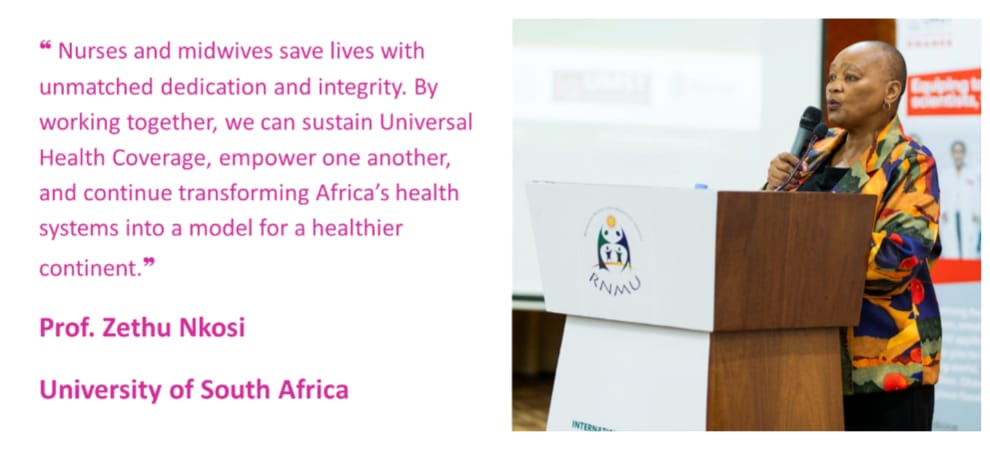
Plenary: Transforming Primary Healthcare through Nursing and Midwifery Leadership – Pathways to Universal Health Coverage
Keynote Speaker: Prof. Zethu Nkosi
1. Recognition of Rwanda’s Healthcare Milestone
· Prof. Nkosi opened by commending the Government of Rwanda and the Ministry of Health for their remarkable progress in expanding health coverage.
· She noted that Rwanda’s achievements, as highlighted by the World Health Organization (WHO), stand as a model for other developing nations striving toward Universal Health Coverage (UHC).
2. Africa as a Global Health Destination
· Prof. Nkosi underscored a historic shift in global health dynamics, emphasizing that Africa is increasingly recognized as a destination for quality health services.
· She pointed out that patients from other continents are now seeking care in African nations, drawn by the continent’s rising standards in medical practice and the dedication of its health workforce.
3. The Pathway to Universal Health Coverage (UHC)
· Leadership as the Driver: Prof. Nkosi stressed that achieving UHC is impossible without strong leadership from nurses and midwives. She argued that they must be seen not merely as implementers of care but as the architects of Primary Health Care (PHC) systems.
· Pathways to Transformation:
- Clinical Excellence: Advancing
beyond basic care to evidence-based, specialized clinical leadership.
- Policy Influence: Ensuring
nurses and midwives take seats at national and international policy-making
tables to advocate for health equity.
- Resource Optimization: Leveraging leadership to maximize limited resources, particularly in rural and underserved areas.
4. Call to Action
- Prof. Nkosi concluded with a
powerful challenge: delegates must return to their institutions not only
as clinicians but as transformational leaders.
- She emphasized that the
“African solution” to global health challenges lies in the hands of the
nursing and midwifery workforce, whose leadership will shape the future of
PHC and UHC.
Plenary: Closing Session and Ways Forward
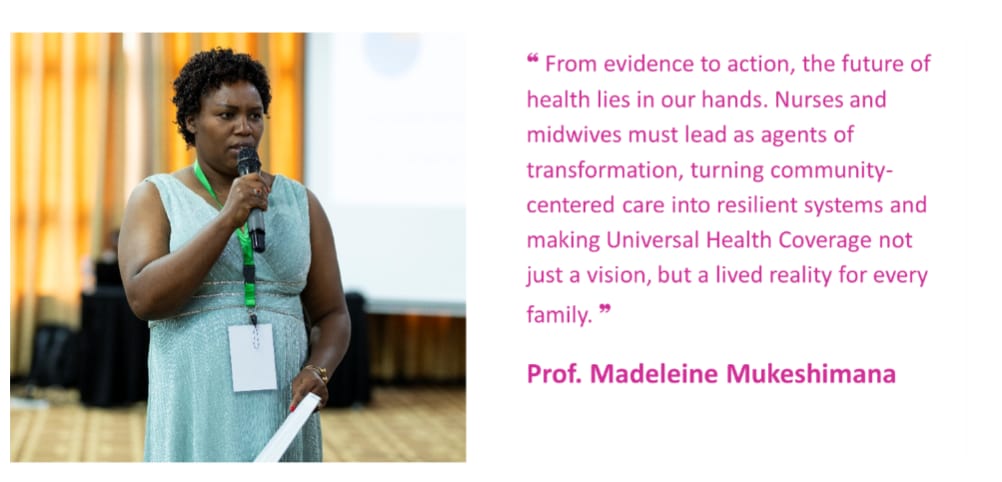
Speaker: Professor Madeleine Mukeshimana
1. Synthesis of Ways Forward
- Professor Madeleine
Mukeshimana led the final plenary session, offering a synthesis of the
strategic directions emerging from three days of scientific exchange and
dialogue.
- She emphasized the
critical need to move from evidence to action, urging delegates to
actively implement the community-centered Primary Healthcare (PHC) models
that had been discussed throughout the convention.
- A central focus was
placed on the Pathways to Universal Health Coverage (UHC), with Professor
Mukeshimana reinforcing that nursing and midwifery leadership are the
primary drivers of health system resilience in developing countries.
- Her closing remarks underscored the responsibility of delegates to return to their institutions as agents of transformation, ensuring that the insights gained translate into tangible improvements in healthcare delivery.
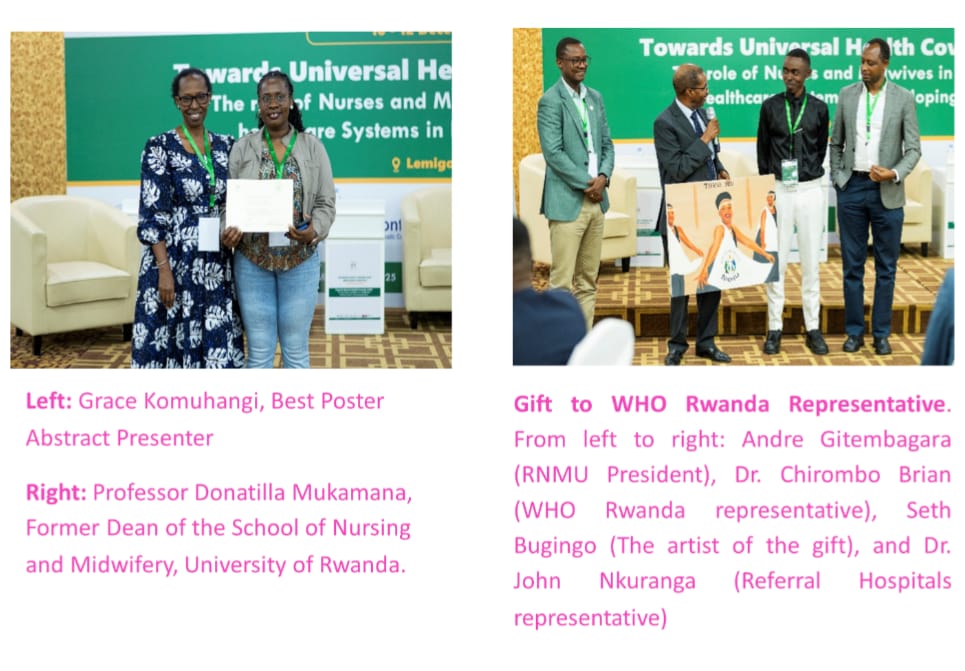
2. Recognition and Gift Donation Ceremony
This session recognized the outstanding contributions of sponsors and the best abstract presenters.
5. CLOSING REMARKS
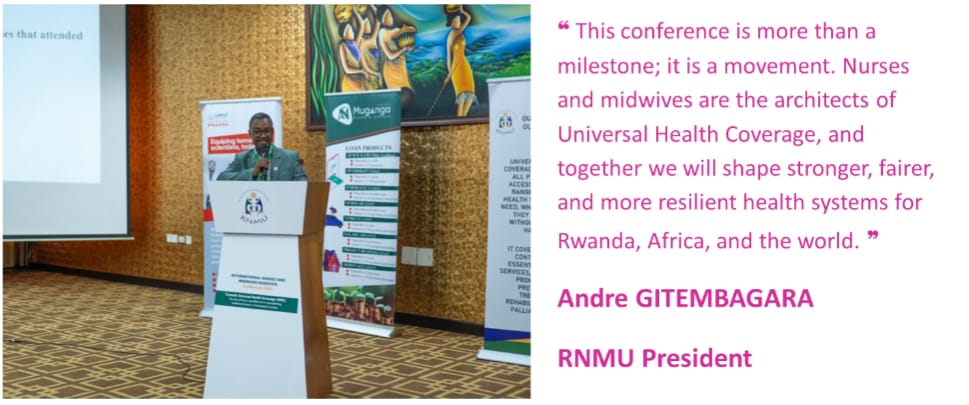
Mr. Andre Gitembagara, RNMU President, the official host, delivered the final closing remarks. He expressed deep gratitude to the Ministry of Health, international and national delegates, and the organizing committee for the successful execution of the 2025 conference. He officially closed the session by reaffirming the important role of nurses and midwives in building a resilient health system and the RNMU's commitment to supporting the process through the motto: Nurses and Midwives for Better Services.
- Prof. Nkosi concluded with a
powerful challenge: delegates must return to their institutions not only
as clinicians but as transformational leaders.
- Paradigm Shift in Education: Moving
from hospital-centered to community-centered models is essential to meet
current and future health needs.
- Advocacy and Policy
Influence: Professional unions are pivotal in shaping
health policy, ensuring that nurses and midwives are empowered to actively
contribute to national health priorities and reforms.
- Epidemiological
Shift: NCDs now account for 46% of deaths in health facilities and 61% of
deaths in the community, with hypertension prevalence rising to 16.8% and
diabetes steady at 2.9%. Risk factors such as high salt consumption (8.8g
daily average) and alcohol use remain major concerns.
- Scaling Digital Platforms:
Policymakers should prioritize investment in technology platforms like
eFiche to strengthen documentation, automate workflows, and enhance
clinical decision-making.